
|
General
English Level 5 V 3
|
|

|
LANGUAGE FOCUS 05 The passive - present perfect |
| In this activity we will look at how and when to use the passive form in the present perfect tense. |
|
|
|
||||
|
|
|
|
|
|
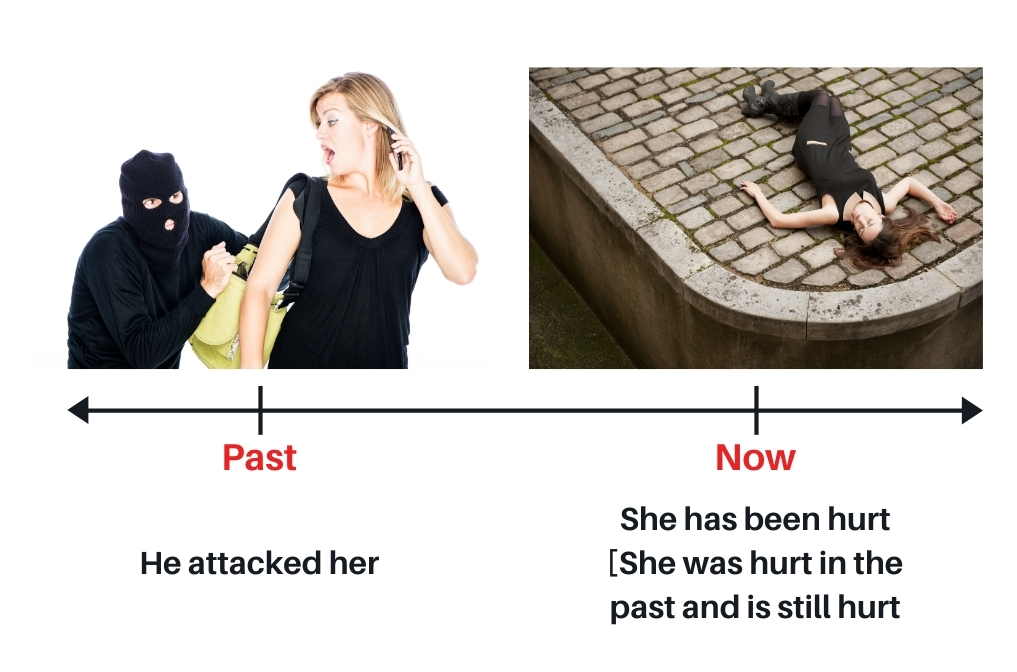
Sophie talks about the result of an action in the past. "Has been hurt" is the passive form of the present perfect tense. We use the passive voice when the person or thing affected by the action is more important than who or what did the action. We also use the passive when we don't know who did the action. |
|
|
Find out more about the passive. |

|
|
|
|
||||||||
|
|
|
|
|
Mathew talks about the effect of a recent action
on the woman. He could say,
"A man has attacked a woman"
,
but the effect of the action on the woman is more important than
who did the action.
Has been attacked
is the passive form
of the
present perfect tense
.
|

|
|
|
|
|
|
|
|
|
|
|
|
|
|
We make the passive form of the present perfect tense with have/has + been + the past participle. |
|
|
Find out more about past participles. |
|
|
|
Examples |
|
|
|
|
|
|
|
|
|
|
|
Now go to 06 WRITING The present perfect passive. |

|
|
|
|

|

|